
Cooking Time
15 minutes
Season
Dietary
Information
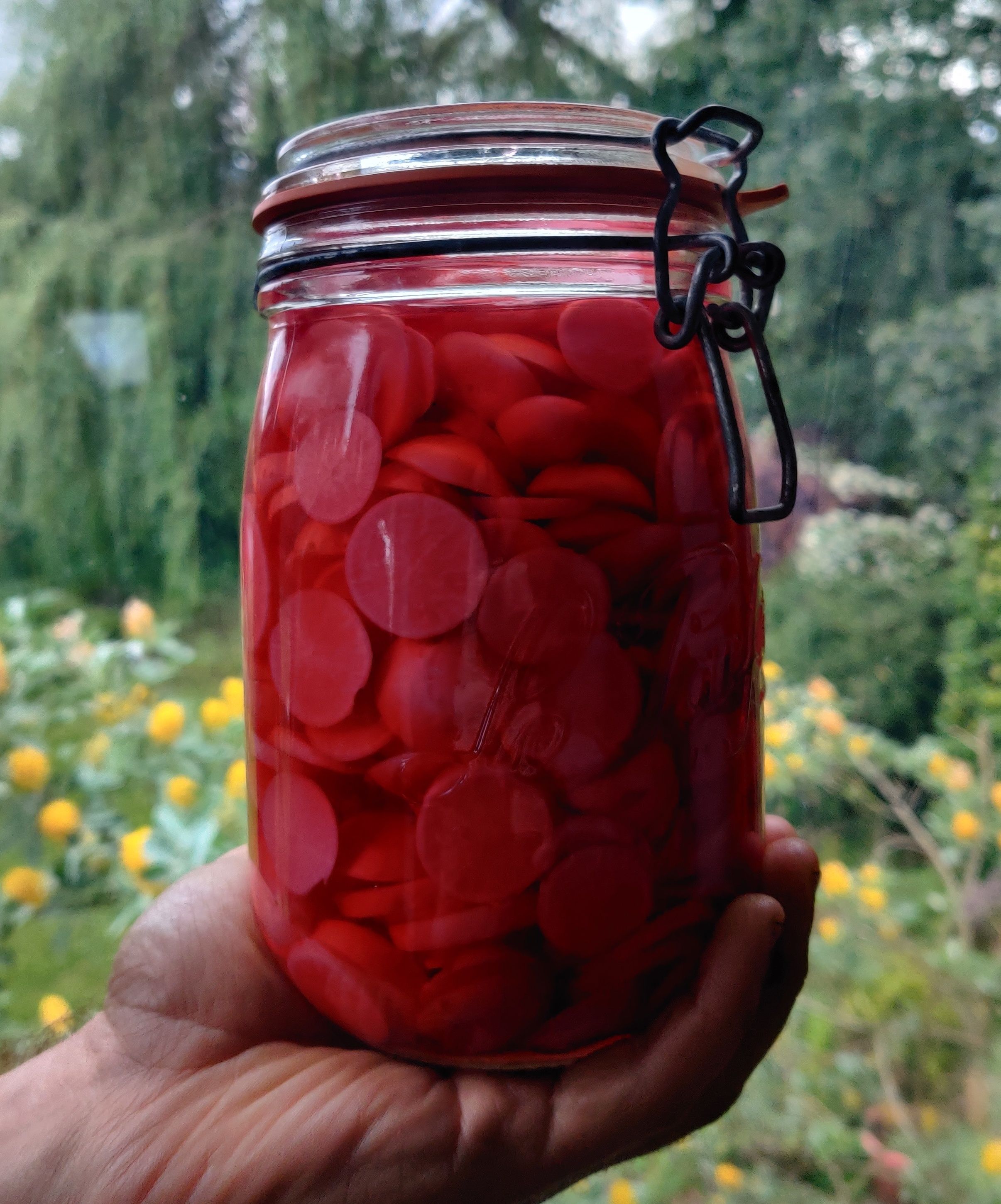
Pickles are a staple in our household. They are a great way to add crunch, colour, flavour and acidity to any meal. We will always have a jar of pickles on our table during lunch and they are so easy to throw into sandwiches for some tang and bite. They are a great way to use up excess produce and you can pickle loads of things: radishes, garlic scapes, cucumbers, onions, carrots, you name it. Therefore, this recipe is simple and versatile and will work with almost any fresh produce that is traditionally pickled. We use this recipe to pickle summer radishes in spring and summer, and pickle Daikon radish (our favourite!) from the autumn months. Quick-pickled vegetables are not shelf-stable and need to be stored in the fridge, but they are ready to eat in 24 hours.
Ingredients:
- Any amount of radishes, sliced to desired sizes
- A jar that will snugly fit your sliced radishes
- Vinegar of your choice (apple cider, distilled white vinegar, wine vinegar etc.)
- 1/2 - 1 teaspoon of salt
- 1/2 - 1 tablespoon of sugar
- (Optional) Pickling spices, such as whole peppercorns, mustard seeds, of bay leaves
- Water
Method:
- Wash and slice your radishes to your desired size.
- Place your sliced radishes into a clean jar. Pack the radishes down snugly into the jar. The more you pack them, the less pickling brine you will need and the more pickled radishes you will make.
- With the jar filled with radishes, pour in vinegar until the jar is half full. The vinegar you use is up to you (see notes)
- Top up the rest of the jar with water. This is to make a 50% vinegar and water brine that is the perfect amount for your jar
- Pour your brine mix out of the jar (whilst leaving the radishes still in the jar) into a saucepan.
- Add salt and sugar to your brine. The amount depends on how much brine you have made. Taste-test it to see if it is salty enough and sweet enough to your liking and if you prefer sweet pickles or tangy pickles.
- (Optional) Add any pickling spices if using. Half a teaspoon of whole peppercorns, mustard seeds and/or a couple of bay leaves are great options if you have them on hand. This is completely optional and you will still get great pickles regardless.
- Bring your brine to a gentle simmer. Make sure all the sugar and salt is dissolved.
- Pour your brine back over your radishes. Ensure all radishes are submerged, seal your jar and allow it to cool.
- Your radishes should be ready to eat the following day, although waiting longer will only improve the flavour. Store them in the fridge and consume over the next few weeks. Do keep in mind that, as radishes are in the brassica family, opening the jar can be a bit stinky as they pickle, but they will taste amazing.
Notes:1
- I prefer slicing my radishes into thin rounds as then they layer nicely in sandwiches. Any shape works however. Thicker pieces might take a little longer to pickle through completely.
- Try to use a jar appropriate for the number of radishes you have. You want your radishes completely submerged in the brine to pickle properly and the more you can stuff into a jar, the less brine you will have to use. I aim to fill the jar completely with radishes before i measure my brine. Alteratively, you can use any vessel with an airtight lid, such as a tupperware
- The vinegar you use is up to you. Distilled vinegar is the simplest and most affordable, but apple cider vinegar or wine vinegar also work great. I rarely notice a difference in the pickles based on the vinegar used.
- These are not shelf-stable pickles so they should be stored in the fridge. The acidity of the brine should keep them good for a few weeks in the fridge, if they last that long!


© 2026 - Oakcroft Organics
Powered by
