
Season
Dietary
Information
There is nothing quite like elderflower season. The bright, saucer-like flowers that adorn hedgerows in the countryside and the refreshing drink that they make always bring us a sense of excitement and thoughts of the encroaching summer. It is always a great excuse to go on a country walk to forage the flowers and make one of our favourite drinks of the year. In fact, I never seem to be able to make enough. Every year I increase the amount that I make, only to wish I had made more when the elderflowes are gone.
A note on foraging elderflowers:
Please be 100% sure that what you are foraging is in fact, elderflower. We recommend finding someone who has foraged elderflower before and foraging with them the first time you do so. There are toxic lookalikes (similar shapped flowers) that should not be confused for elderflower. All parts of the plant should be considered when identifying a plant, not just the flowers. This recipe and the photos below are by no means a guide to foraging.
Elderflowers are best foraged in the morning after the dew has dried but before the midday sun. This is when they are the most potent in their scent. Only forage flowers that are fully open and in peak condition. Wilting or browning flowers can impart an off-putting taste to your cordial. Try to forage flowers away from busy roads or from farms that see heavy agricultural traffic which might be contaminated.
Avoid the temptation to wash the elderflower heads. This washes off the pollen and diminishes the flavour when infusing the flowers. I usually let them air on my counter for a few hours after harvesting to allow any hitchhikers to make their way off the flowers, and inspect the flowers carefully before infusing
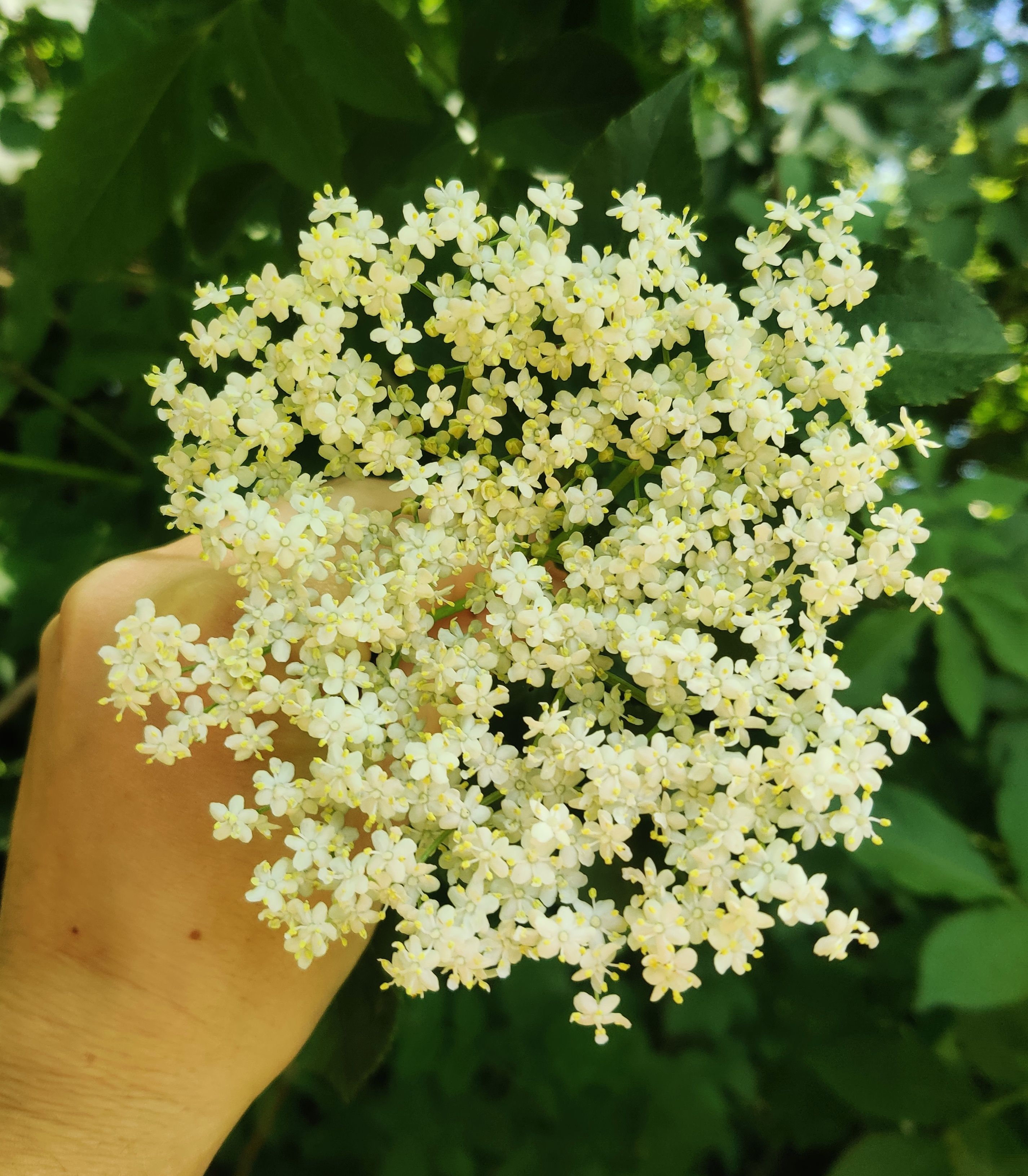
Elderflowers on the Elder Tree
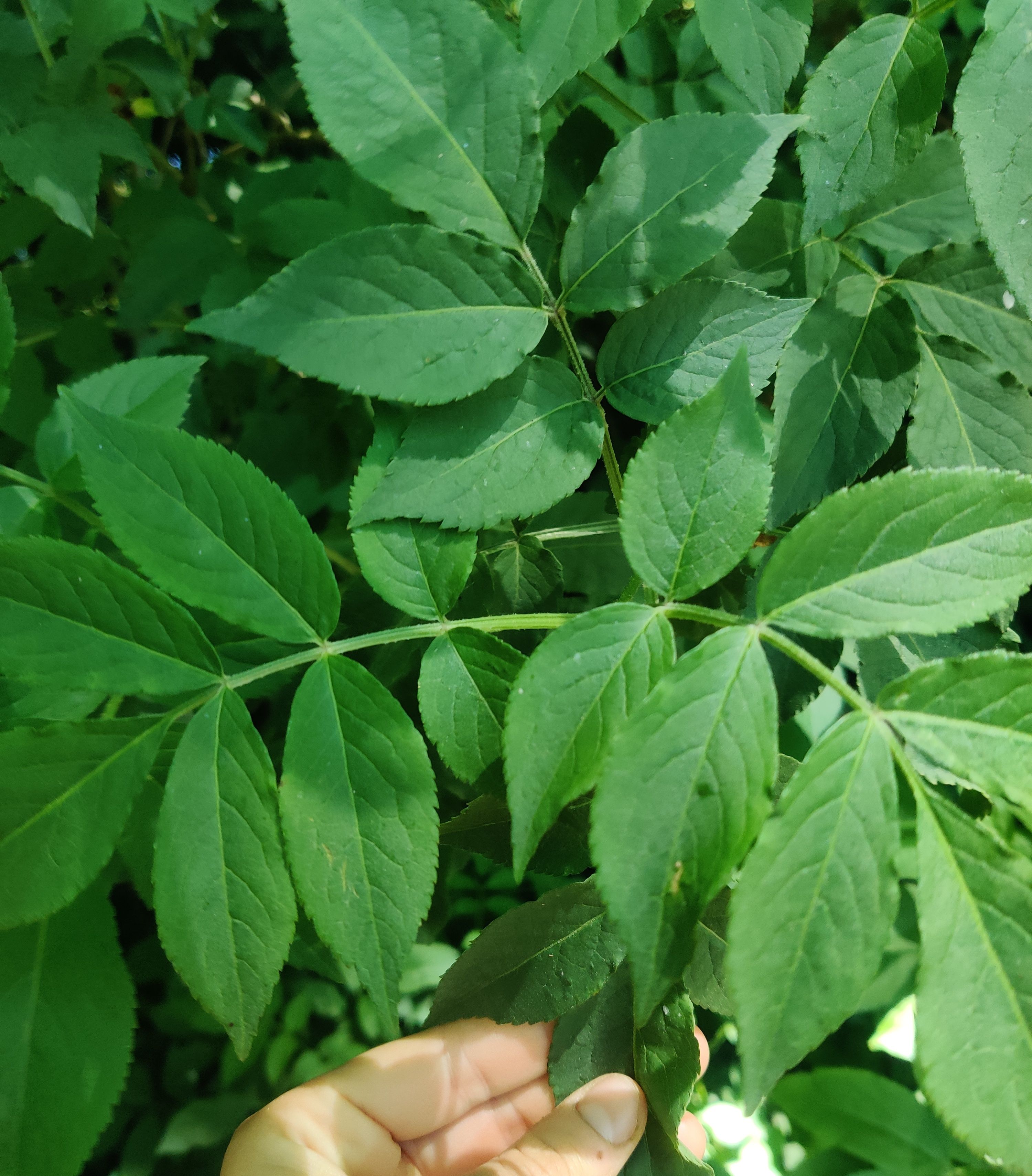
Leaves of the Elder Tree
Ingredients
- 20-30 Elderflower heads
- 1 litre of water
- 1 kg of sugar
- 2 unwaxed lemons
- 40g citric acid (or replace with two additional lemons)
Method
- Inspect the flowers carefully and remove any bad parts. With a pair of scissors, cut away as much of the green stems of the elderflowers as possible and discard. The stems and green parts of the Elder tree can impart an astringent taste to the cordial, so removal is necessary, albeit a bit time-consuming. Resist the urge to wash the flowers to preserve the pollen on the buds. Set the flowers aside
- Wash and thinly slice the lemons. Set them aside.
- In a large pot, add the sugar and water and heat until fully dissolved.
- Add the citric acid (if using), and stir until dissolved. Take precautions you do not get it on your skin and eyes as it is highly acidic. You want to dissolve the citric acid fully before adding the flowers otherwise the flowers will brown.
- Take the pot off the heat and allow to cool to below 75 degrees. Infusing the flowers at high temperatures will destroy the flavour. You might want to transfer the syrup to a diferent food safe vessel for infusing.
- Add the sliced lemons and the elderflowers to the syrup.
- Stir and cover. Allow to infuse for 24-48 hours. The longer you leave it, the better the flavour.
- Once infused, strain the syrup through a muslin cloth or a fine mesh strainer. Resist the urge to squeeze the lemons or the cordial might end up too lemony.
- Bottle in sterilised bottles and store in the fridge. The cordial should last a few weeks in the fridge.
- To serve, dilute the cordial with water or sparkling water for a refreshing drink!


© 2026 - Oakcroft Organics
Powered by
